How to Select Quality Disposable Products for Medical Applications
Sourcing medical consumables directly impacts clinical safety and facility operating budgets. Procurement teams must evaluate high-volume single-use items beyond basic unit pricing. Selecting quality disposable products requires analyzing material biocompatibility, sterilization methods, and supplier quality systems.
Low-quality consumables increase infection risks and cause frequent procedural delays. B2B buyers must distinguish between commercial-grade plastics and verified medical-grade polymers. This technical guide outlines how to audit disposable product manufacturers for commercial healthcare procurement.
What Defines Quality Disposable Products in Healthcare?
Medical environments demand strict dimensional and biological consistency across high-volume production batches. A minor defect in a disposable product can compromise a sterile field immediately.
Quality disposable products are evaluated based on three primary engineering criteria:
- Biocompatibility: The material must not trigger toxic or immunological reactions when contacting patient tissue.
- Tensile Strength: Components must resist tearing or breaking under procedural stress.
- Barrier Integrity: Packaging must maintain absolute sterility until the point of clinical use.
High-quality manufacturing minimizes particulate contamination during plastic extrusion and assembly. These stringent requirements separate certified medical consumables from standard commercial disposable goods.
Material Selection: Medical-Grade Polymers vs. Alternatives
The raw material dictates the physical performance and safety profile of the disposable item. Procurement managers must verify the specific polymer grades used in production.
Polyvinyl Chloride (PVC) is widely used for medical tubing and oxygen therapy masks. However, medical-grade PVC must be formulated with non-toxic plasticizers to prevent chemical leaching.
Polyurethane (PU) offers superior flexibility and kink resistance for critical fluid delivery systems. While PU is more expensive than PVC, it provides exceptional biocompatibility for longer-term patient contact.
For protective wear and surgical drapes, spunbond meltblown spunbond (SMS) non-woven fabrics are standard. Quality SMS fabric provides high fluid resistance while maintaining necessary vapor permeability for staff comfort.
Evaluating Sterilization and Cleanroom Manufacturing
Manufacturing environment controls directly determine the baseline cleanliness of medical disposables. Reliable OEM suppliers operate certified cleanrooms to prevent airborne particulate contamination.
Standard disposable manufacturing occurs in Class 100,000 (ISO Class 8) cleanroom facilities. The ventilation systems continuously filter the air to eliminate microscopic dust and microbes.
Standard Medical Sterilization Methods
| Sterilization Method | Mechanism | Ideal Application | Material Limitations |
| Ethylene Oxide (EO Gas) | Disrupts cellular DNA | Complex plastic assemblies | Requires lengthy degassing |
| Gamma Irradiation | High-energy radiation | Pre-packaged consumables | Can degrade certain polymers |
| Steam Autoclave | High heat and pressure | Surgical stainless steel | Melts standard disposable plastics |
Buyers must request sterilization validation reports for every production lot. This documentation proves the products achieved the required Sterility Assurance Level (SAL).

Performance Tradeoffs and Acceptable Quality Limits (AQL)
In large-volume production, a zero-defect rate is mathematically impossible. Manufacturers and buyers agree on Acceptable Quality Limits (AQL) to govern batch rejections.
An AQL of 1.5 means no more than 1.5% of the sampled batch can exhibit critical defects. If a random sample exceeds this threshold, the entire production run is rejected.
Purchasing managers often face a tradeoff between strict AQL limits and procurement costs. Tightening the AQL from 2.5 to 1.0 requires the factory to implement slower, highly rigorous inspections. This increases the unit cost but drastically reduces clinical failure rates.
How to Audit a Medical Disposable Supplier
Sourcing from international OEMs requires a structured vetting process to mitigate supply chain risks.
B2B Procurement Workflow for Disposables
- Request Certifications: Verify the supplier holds active ISO 13485 certification for medical device quality management.
- Evaluate Technical Files: Request the material safety data sheets (MSDS) and biocompatibility test reports.
- Review Traceability: Ensure the factory utilizes lot numbers for post-market tracking and recalls.
- Confirm Global Compliance: Check for CE marking (Europe) or FDA 510(k) clearance (United States).
Avoid suppliers who cannot provide immediate documentation for their raw material supply chains.
Sourcing Reliable Medical Accessories and Consumables
Partnering with an established manufacturer simplifies the complex medical procurement process. Buyers need suppliers who offer a broad catalog with consistent quality controls.
Platforms like Unimed Medical provide extensive lines of medical consumables and healthcare equipment. Their portfolio covers essential single-use items, including ostomy bags, oxygen therapy products, and diagnostic electrodes.
Sourcing multiple disposable categories from a single qualified OEM reduces shipping overhead and administrative burdens. It also ensures consistent material quality across different hospital departments.
When evaluating a new supply contract, request clear documentation regarding factory production capacity. Reliable manufacturers can scale production rapidly to meet sudden clinical demands without sacrificing AQL standards.

FAQ
Q: What is the difference between commercial and medical-grade PVC?
A: Commercial PVC often contains industrial plasticizers that can leach harmful chemicals. Medical-grade PVC is strictly formulated with biocompatible plasticizers, ensuring it is safe for direct patient contact and fluid delivery.
Q: What does ISO 13485 mean for disposable products?
A: ISO 13485 is the international quality management standard specifically for medical devices. It guarantees the manufacturer follows strict protocols for cleanroom production, material traceability, and defect management.
Q: How do manufacturers ensure disposable products remain sterile?
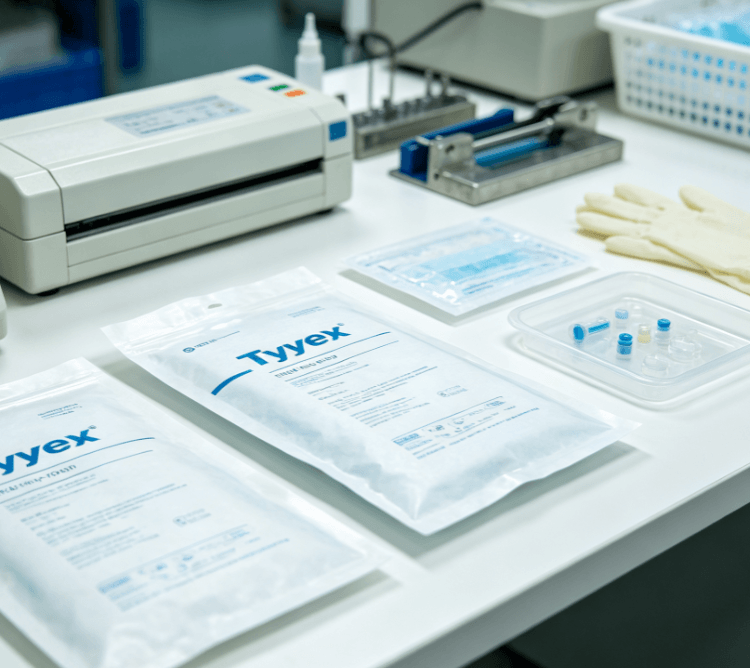
A: Products are sealed in specialized medical pouches made of Tyvek or medical-grade paper. They are then subjected to sterilization, usually via Ethylene Oxide (EO) gas or Gamma irradiation, which penetrates the packaging.
Q: Why do buyers use Acceptable Quality Limits (AQL) for large orders?
A: AQL provides a statistical standard for inspecting high-volume production runs. It defines the maximum number of allowable defects in a random sample, allowing buyers to reject substandard batches efficiently.
Q: Can we customize medical disposable products through an OEM?
A: Yes, qualified OEMs can modify tooling for custom dimensions, tubing lengths, or specialized connectors. However, custom medical modifications usually require updated biocompatibility testing and extended production lead times.
Reference Sources
- International Organization for Standardization (ISO): ISO 13485 – Medical devices — Quality management systems.
- U.S. Food and Drug Administration (FDA): Code of Federal Regulations Title 21, Part 820 – Quality System Regulation.
- ISO 10993: Biological evaluation of medical devices.
- Centers for Disease Control and Prevention (CDC): Guidelines for Disinfection and Sterilization in Healthcare Facilities.