
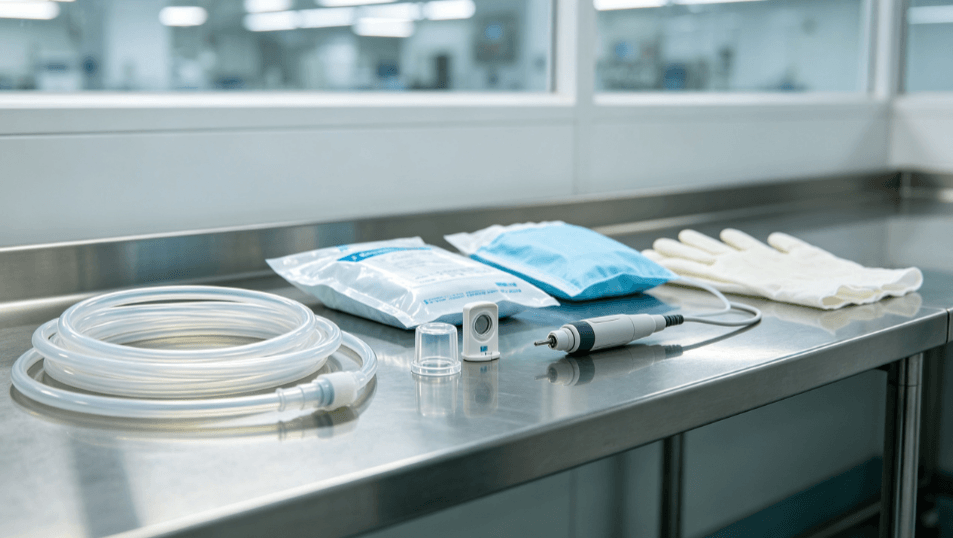
Industrial disposable products, often referred to as single-use consumables, represent a critical category of tools designed for one-time use followed by disposal or recycling. In high-stakes environments—ranging from cleanrooms and manufacturing floors to clinical settings—these products serve as the primary defense against cross-contamination, chemical exposure, and procedural failure.
While the term “disposable” might suggest simplicity, the engineering behind these products is complex. Each item must meet rigorous performance metrics during its brief lifecycle to ensure user safety and process integrity.
What Defines an Industrial-Grade Disposable Product?
In an industrial or medical context, a disposable product is defined by its intended lifecycle and its regulatory compliance. Unlike consumer-grade disposables, industrial versions are engineered to withstand specific stressors, such as high-intensity sterilization, chemical abrasion, or biological fluid contact.
The primary objective of these products is to provide a sterile or controlled interface between a user, a machine, and a patient or product. In manufacturing, this might mean a lint-free wipe for sensitive electronics; in healthcare, it often involves diagnostic components like SpO2 sensors, cables, or temperature probes that interface directly with human tissue.
Material Science: The Backbone of High-Performance Disposables
The efficacy of disposable products depends heavily on material selection. Manufacturers prioritize materials that offer specific barrier properties while remaining cost-effective for high-volume production.
Common materials used in industrial and medical disposables include:
| Material Type | Key Characteristics | Common Applications |
| Non-woven Polypropylene | High breathability, moisture resistance, and filtration. | Surgical masks, gowns, and cleanroom apparel. |
| Medical-grade PVC/TPU | Flexibility, biocompatibility, and chemical stability. | Tubing, sensor housings, and fluid bags. |
| Nitrile/Latex | High tactile sensitivity and chemical resistance. | Protective gloves and precision handling tools. |
| Silicone | Heat resistance and extreme biocompatibility. | Seals, gaskets, and long-contact medical components. |
In the medical consumables sector, materials must also comply with ISO 10993 standards for biocompatibility. This ensures that the product does not elicit an adverse immune response when in contact with a patient.

Key Categories in Industrial and Medical Environments
Industrial disposables are categorized based on their risk level and functional environment. Understanding these categories is essential for maintaining operational safety and regulatory compliance.
1. Personal Protective Equipment (PPE)
PPE is the most visible category of disposables. In industrial settings, this includes disposable respirators, earplugs, and chemical-resistant coveralls. In medical settings, this shifts toward fluid-resistant gowns and sterile gloves designed to prevent the transmission of pathogens.
2. Diagnostic and Monitoring Consumables
This category is particularly critical in the healthcare industry. These are components that transmit data from a patient to a monitoring system. Examples include:
- Disposable SpO2 sensors
- ECG lead wires
- Temperature probes
- Pressure transducer kits
Modern manufacturing allows these components to be produced with high precision, ensuring that a single-use sensor provides the same accuracy as a reusable one without the risk of hospital-acquired infections (HAIs).
3. Maintenance and Cleanroom Supplies
For industries like semiconductor manufacturing or aerospace, disposables include specialized wipes, swabs, and adhesive mats. These products are designed to have extremely low particulate shedding to prevent the contamination of micro-circuits or high-tolerance components.
Why Single-Use? The Logic of Safety and Economics
The shift toward disposable products in industrial sectors is driven by three primary factors: safety, reliability, and total cost of ownership.
Elimination of Cross-Contamination
In healthcare, the use of single-use consumables is the most effective way to break the chain of infection. Reusing instruments requires a complex cycle of cleaning, decontamination, and sterilization. Even with strict protocols, the risk of residual bioburden remains. Disposables provide a “zero-baseline” of cleanliness for every procedure.
Guaranteed Performance
Reusable products degrade over time. Each sterilization cycle (autoclave, Gamma, or EtO) can weaken polymers and affect the calibration of electronic components. Industrial disposable products offer “out-of-the-box” performance, ensuring that every unit meets the original equipment manufacturer (OEM) specifications.
Economic Efficiency
While the unit cost of a disposable item is recurring, it eliminates the hidden costs of reuse. These include labor for cleaning, chemical costs for sterilization, energy for autoclaving, and the logistical burden of tracking the lifecycle of reusable assets.
Technical Compliance and Manufacturing Standards
Manufacturing industrial-grade disposables is a high-precision process governed by international standards. A reputable manufacturer must adhere to several key certifications:
- ISO 13485: The gold standard for quality management systems in the medical device industry.
- CE Marking: Indicates compliance with health, safety, and environmental protection standards for products sold within the European Economic Area.
- FDA Registration: Ensures that products used in the United States meet the safety requirements of the Food and Drug Administration.
- Cleanroom Standards (ISO 14644): Many disposables must be manufactured in Class 10,000 or Class 100,000 cleanrooms to ensure they are free from environmental contaminants before packaging.
Future Trends: Sustainability in Disposables
The industrial world is currently grappling with the environmental impact of single-use products. The next generation of industrial disposables is focused on “green” engineering. This includes the development of biodegradable polymers, recyclable non-woven fabrics, and “circular” procurement models where manufacturers take back used products for material recovery.
Furthermore, the integration of “smart” technology into disposables is increasing. We are seeing the rise of single-use sensors that can transmit data wirelessly, reducing the need for heavy, reusable cabling in mobile medical environments or remote industrial monitoring sites.
Strategic Integration for Professional Operations
For professionals in procurement and facility management, selecting the right industrial disposable products is a balance of technical requirements and safety standards. Whether you are managing a high-volume manufacturing plant or a specialized medical facility, the focus remains on sourcing products that offer consistent barrier protection and material integrity.
The specialized nature of medical consumables highlights how the industry is moving toward highly specific, single-use solutions for complex diagnostic challenges. By prioritizing products that meet international safety certifications, organizations can ensure both operational efficiency and the highest level of safety for their personnel and end-users.

FAQ
Q1: What is the difference between consumer-grade and industrial-grade disposables?
Industrial-grade disposables are engineered for specific performance tolerances, chemical resistance, and regulatory compliance (like ISO or FDA standards), whereas consumer-grade products are designed for general hygiene and lack the technical documentation required for high-risk environments.
Q2: Are all medical-grade disposable products sterile?
Not necessarily. While many disposables, such as surgical instruments and internal sensors, must be sterile, many other consumables are “clean” but non-sterile. The requirement depends on whether the product will contact sterile tissue or mucous membranes.
Q3: How do manufacturers ensure the reliability of single-use electronic components?
Manufacturers utilize automated testing protocols during the production process to ensure every unit meets the required electrical and signal-to-noise ratio standards. This is often more consistent than testing reusable components that have undergone multiple cleaning cycles.
Q4: Can industrial disposable products be recycled?
Many can, but it depends on the contamination level after use. Products used with hazardous chemicals or bio-hazardous materials are typically incinerated for safety. However, unused or non-contaminated plastic-based disposables are increasingly being diverted to specialized recycling streams.
Q5: Why is Spunbond Meltblown Spunbond (SMS) fabric so common in disposables?
SMS is a trilaminate fabric that combines the structural strength of spunbond polypropylene with the superior filtration and barrier properties of meltblown polypropylene, making it ideal for protective apparel.
Reference Sources
- ISO (International Organization for Standardization) – ISO 13485:2016 Medical devices — Quality management systems
- FDA (U.S. Food and Drug Administration) – CFR – Code of Federal Regulations Title 21: Medical Device Quality System Regulation
- Association for the Advancement of Medical Instrumentation (AAMI) – Technical Information Reports on Sterilization and PPE Levels
- SGS Global Services – Medical Device Testing and Certification Overview
- ScienceDirect – Journal of Hospital Infection: Studies on the efficacy of single-use vs. reusable devices