
Ethylene-Vinyl Acetate, commonly known as EVA material, represents one of the most versatile functional polymers in the modern industrial landscape. As a copolymer of ethylene and vinyl acetate, its characteristics bridge the gap between traditional plastics and elastomers. For engineers, product designers, and procurement specialists, understanding the technical nuances of EVA is critical when selecting materials that require a balance of durability, flexibility, and chemical stability.
The adoption of EVA has surged across sectors—ranging from automotive components to sophisticated medical device manufacturing—due to its adaptability. Unlike many other polymers, EVA’s performance can be “tuned” by adjusting the ratio of vinyl acetate (VA) content, allowing for a spectrum of outcomes from high-clarity films to high-impact foams.

What is EVA Material? Understanding the Chemical Architecture
At its core, EVA is a thermoplastic copolymer. The integration of vinyl acetate into the ethylene chain disrupts the polymer’s crystallinity. This disruption is what grants EVA its characteristic “rubber-like” softness and flexibility.
The properties of EVA are primarily dictated by the weight percentage of vinyl acetate, which typically ranges from 10% to 40%.
- Low VA Content (Under 10%): Results in a material that is relatively stiff, resembling low-density polyethylene (LDPE), often used for industrial films and packaging.
- Medium VA Content (15% to 30%): Provides increased flexibility, higher impact resistance at low temperatures, and better clarity.
- High VA Content (Above 30%): Yields a material with high elasticity and significant adhesive properties, often utilized in hot-melt adhesives or specialized medical components.
From a manufacturing perspective, EVA is valued because it can be processed through standard thermoplastic techniques, including injection molding, extrusion, and blow molding, without the need for vulcanization.
Technical Features: Why EVA Outperforms Traditional Polymers
Engineers select EVA material not just for its cost-efficiency, but for its specific performance metrics under mechanical stress and environmental exposure.
1. Exceptional Stress-Crack Resistance
One of EVA’s most significant advantages is its ability to withstand environmental stress cracking. In applications where a component must undergo repetitive bending or torsion—such as in medical cable relief or wearable sensors—EVA maintains its structural integrity where other polymers might fail or fatigue.
2. Chemical and UV Resistance
EVA displays robust resistance to many polar solvents, fats, and oils. Furthermore, its inherent UV stability makes it a superior choice for products exposed to sunlight or sterilization processes. In medical environments, where surfaces are frequently treated with harsh disinfectants, the chemical resilience of EVA-based components ensures a longer product lifecycle.
3. Biocompatibility and Patient Comfort
In the medical and healthcare sectors, EVA is often the material of choice for skin-contact applications. It is generally free of plasticizers (like phthalates) and is non-toxic. Its soft-touch surface reduces the risk of skin irritation, making it ideal for the outer jackets of patient monitoring cables and disposable electrode backings.
4. Thermal Performance
EVA maintains its flexibility at extremely low temperatures, even down to -70°C. This cryogenic stability is essential for specialized packaging and industrial seals that operate in controlled cold-chain environments.
Comparative Analysis: EVA vs. Alternative Polymers
When selecting a material for precision manufacturing, it is helpful to compare EVA against other common elastomers and plastics.
| Feature | EVA Material | PVC (Polyvinyl Chloride) | PE (Polyethylene) |
| Flexibility | High (Internal) | High (Requires Plasticizers) | Low to Medium |
| Transparency | Excellent | Variable | Translucent/Opaque |
| Toxic Emissions | Low (BPA/Phthalate Free) | High (Chlorine concern) | Low |
| Adhesion | Excellent | Poor | Poor |
| Weight | Lightweight | Heavier | Very Lightweight |
Industrial and Medical Applications of EVA
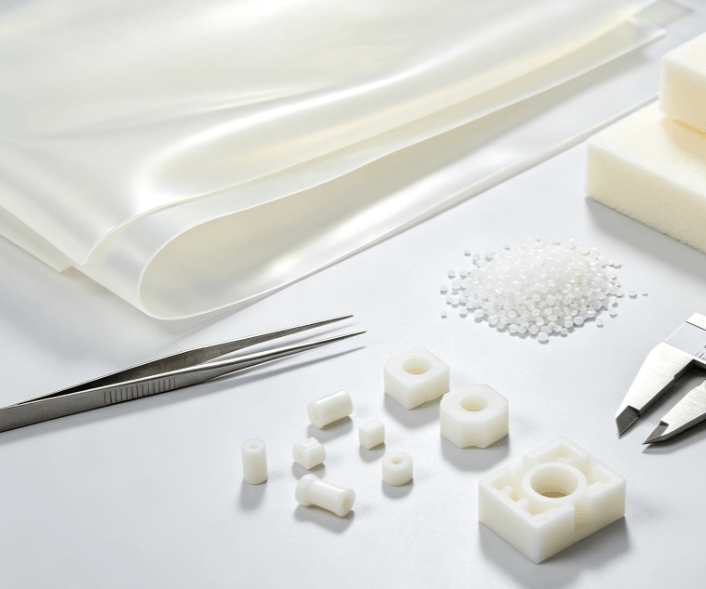
The versatility of EVA material allows it to be utilized in diverse forms—from micro-thin films to heavy-duty foam blocks.
Medical Device Engineering
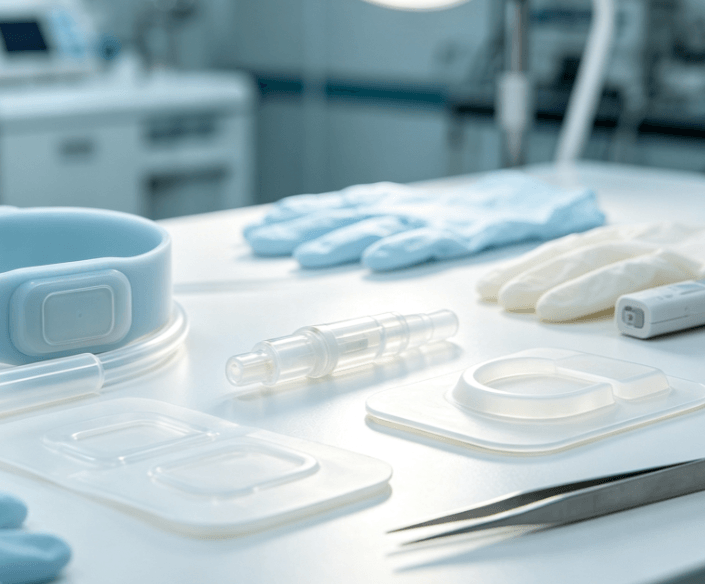
In high-precision medical manufacturing, such as the production of sensors and monitoring accessories, EVA serves several roles. It is frequently used in the construction of medical-grade tubing, catheter components, and protective housings for sensitive electronics. For instance, manufacturers specializing in patient monitoring accessories leverage materials with high dielectric strength and biocompatibility to ensure that sensors remain accurate and safe during prolonged clinical use.
Wearable Technology
The “rubber-to-plastic” hybrid nature of EVA makes it ideal for wearable tech. It provides the necessary cushioning for smartwatches and health trackers while resisting the salt and oils found in human sweat.
High-Performance Packaging
EVA is widely used in the “Clean Room” packaging of sensitive components. Its ability to be molded into precise, impact-absorbing shapes ensures that fragile industrial parts or medical optics are protected during transit without the risk of chemical outgassing.
Manufacturing and Processing Considerations
When integrating EVA material into a production line, several technical factors must be considered to ensure quality and consistency.
- Cross-linking Density: For high-durability applications, EVA can be cross-linked (using peroxides or radiation). This process transforms it into a thermoset-like material with superior heat resistance and mechanical strength.
- Molding Temperature: EVA has a lower melting point than many other plastics. Precise thermal control during injection molding is required to prevent material degradation or “scorching,” which can affect the aesthetic and functional properties of the final part.
- Surface Treatment: While EVA is naturally adhesive in high-VA formulations, low-VA EVA may require corona treatment or specific primers if the product needs to be printed on or bonded to other substrates.
Sustainability and Regulatory Compliance
In the current regulatory climate, the “cleanliness” of a material is as important as its physical properties. EVA is widely recognized as a “greener” alternative to PVC because it does not require plasticizers and does not release hydrochloric acid if incinerated.
For the medical and food industries, EVA must comply with strict standards:
- ISO 10993: Evaluating the biocompatibility of medical device materials.
- REACH and RoHS: Ensuring the material is free from hazardous substances.
- FDA Compliance: Specific grades of EVA are approved for food contact and pharmaceutical packaging.
Conclusion for Project Managers and Engineers
Choosing EVA material is a strategic decision that impacts the longevity, safety, and performance of a product. Whether you are designing a flexible medical sensor or a rugged industrial seal, the chemical adaptability of Ethylene-Vinyl Acetate provides a solution that balances technical rigor with cost-effectiveness.
For organizations involved in complex manufacturing, such as Unimed Medical, the selection of materials like EVA is a cornerstone of quality assurance. By prioritizing materials that offer both high-performance specifications and regulatory compliance, manufacturers can ensure their products meet the demanding needs of global healthcare and industrial markets.
FAQ
Is EVA material waterproof?
Yes, EVA is a closed-cell material, meaning it does not absorb water. This makes it highly resistant to moisture, rot, and mildew, which is why it is frequently used in marine and medical environments.
How does VA content affect the clarity of EVA?
Generally, as the vinyl acetate (VA) content increases, the crystallinity of the polymer decreases. This results in higher transparency and clarity, making high-VA EVA suitable for optical applications and clear packaging.
Is EVA material safe for skin contact?
Medical-grade EVA is considered biocompatible and is widely used in healthcare for items that touch the skin. It is free from BPA, phthalates, and latex, reducing the risk of allergic reactions compared to natural rubber or certain PVC formulations.
What is the difference between EVA foam and EVA film?
The difference lies in the processing. EVA foam is created by adding a blowing agent during the molding process, resulting in a lightweight, impact-absorbing material. EVA film is extruded as a thin, solid sheet, used primarily for lamination, solar cell encapsulation, or medical barriers.
Can EVA be recycled?
Yes, as a thermoplastic, EVA can be melted down and repurposed. However, if the EVA has been “cross-linked” (common in high-end foams), it becomes much harder to recycle through traditional means, requiring specialized chemical or mechanical processes.
Reference Sources
- ASTM D882: Standard Test Method for Tensile Properties of Thin Plastic Sheeting (Applicable to EVA films).
- ISO 10993-1: Biological evaluation of medical devices – Part 1: Evaluation and testing within a risk management process.
- The Society of Plastics Engineers (SPE): Technical papers on the rheology and processing of Ethylene-Vinyl Acetate copolymers.
- SGS/TUV Rheinland: Material Safety Data Sheets (MSDS) and compliance certifications for industrial polymers.