
Selecting the correct polymer is critical when designing medical devices, diagnostic cables, and fluid bags. Engineers must evaluate Polypropylene, Polyvinyl Chloride, and Ethylene-Vinyl Acetate based on flexibility and biocompatibility. Understanding PP vs PVC vs EVA helps medical manufacturers meet strict healthcare standards globally.
Material choice directly impacts product lifespan, sterilization tolerance, and patient safety during clinical procedures. Each polymer exhibits distinct chemical properties that dictate performance in hospital environments. Evaluating mechanical trade-offs prevents field failures in critical diagnostic and therapeutic applications.
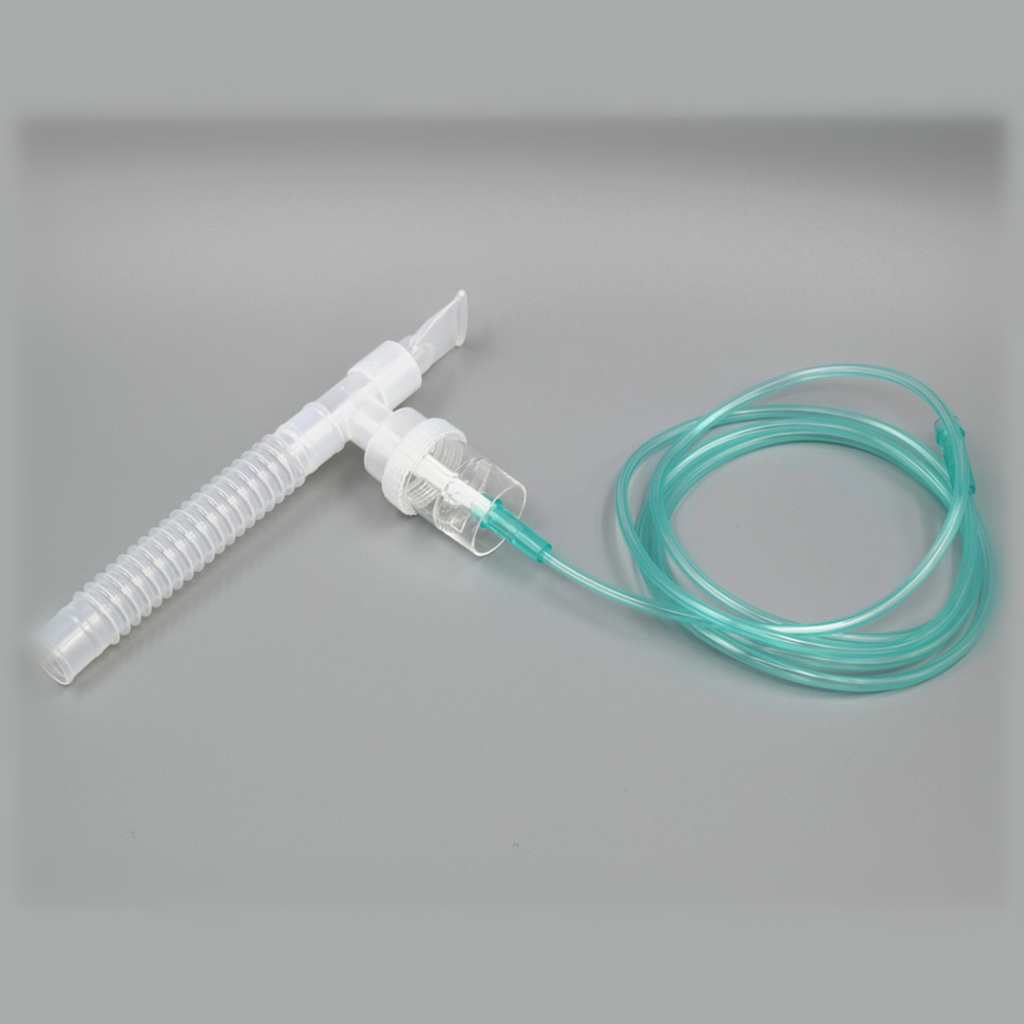
What Are the Key Technical Differences Between PP, PVC, and EVA?
Polypropylene is a rigid thermoplastic known for high heat resistance and structural integrity. Polyvinyl Chloride offers exceptional versatility, clarity, and cost-effectiveness when blended with plasticizers. Ethylene-Vinyl Acetate provides rubber-like flexibility, crack resistance, and latex-free elastic properties.
| Material Parameter | Polypropylene (PP) | Polyvinyl Chloride (PVC) | Ethylene-Vinyl Acetate (EVA) |
| Material Flexibility | Semi-Rigid to Rigid | Soft / Flexible (Plasticized) | Highly Flexible / Elastomeric |
| Tensile Strength | High (25 – 40 MPa) | Moderate (10 – 25 MPa) | Low to Moderate (10 – 20 MPa) |
| Sterilization Suitability | Autoclave, EtO, Gamma | EtO, Gamma (Discolors) | EtO, Gamma |
| Phthalate / DEHP Content | Phthalate-Free | Often Contains Plasticizers | Phthalate-Free / DEHP-Free |
| Low-Temperature Toughness | Poor (Brittle at 0°C) | Moderate | Excellent (Down to -70°C) |
| Primary Medical Uses | Syringes, Connectors, Trays | Tubing, Blood Bags, Cable Jackets | TPN Infusion Bags, Flexible Tubing |
Flexible PVC has historically dominated medical tubing due to easy processing and high clarity. Concerns over plasticizer leaching have accelerated the adoption of PP and EVA alternatives. EVA delivers superior flexibility without requiring plasticizers, eliminating chemical migration risks into medications.
PP excels in applications requiring high thermal resistance and structural rigidity under load. It withstands repeated steam autoclaving without losing dimensional stability or mechanical strength. EVA remains flexible at sub-zero temperatures, making it ideal for frozen biological storage bags.
Comparing Biocompatibility, Sterilization, and Chemical Resistance
Medical grade polymers must pass ISO 10993 and USP Class VI biocompatibility testing. PP and EVA naturally meet non-toxic requirements because they do not require phthalate plasticizers. Formulators using PVC must select DEHP-free plasticizers like TOTM to maintain regulatory compliance.
Sterilization methods impose specific thermal and radiation constraints on polymer molecular chains. PP supports steam autoclaving up to 121 degrees Celsius, whereas PVC and EVA deform under high heat. Gamma irradiation effectively sterilizes all three polymers, though plasticized PVC may yellow slightly over time.
Key evaluation criteria for medical polymer selection include:
- Biocompatibility: Absence of toxic leachables, pyrogens, and heavy metal additives.
- Chemical Resistance: Stability when exposed to disinfectants, lipids, and pharmaceutical solvents.
- Sterilization Compatibility: Ability to endure EtO gas, gamma radiation, or steam heat.
- Environmental Impact: Recyclability and disposal safety during incineration procedures.
Chemical resistance varies significantly when polymers contact alcohol-based sanitizers or lipid solutions. PP offers superior resistance to aggressive solvents and environmental stress cracking compared to flexible PVC. EVA demonstrates excellent resistance to lipid-rich nutrition solutions, protecting delicate parenteral drugs.
Selecting Medical Polymers Across Tubing, Bags, and Cable Assemblies
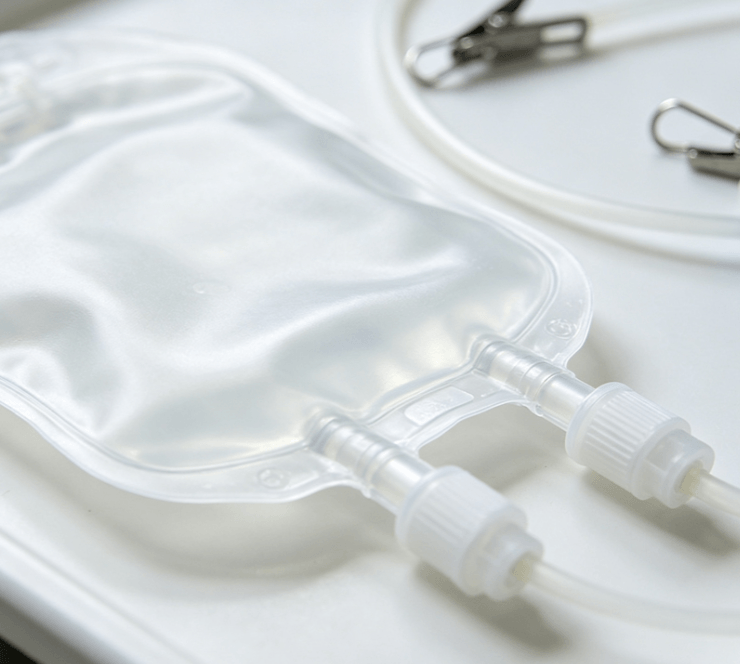
Intravenous bags and total parenteral nutrition systems increasingly utilize EVA films over traditional PVC. EVA prevents drug absorption into bag walls and eliminates DEHP leaching into nutrition fluids. PP multi-layer films are frequently used as protective outer barriers for sterile fluid packaging.
Medical cable assemblies and patient monitoring accessories require durable jacket insulation and overmolding. Flexible PVC provides excellent abrasion resistance and cost efficiency for disposable patient leads. PP is selected for rigid connector shells, strain reliefs, and reusable sensor housings.
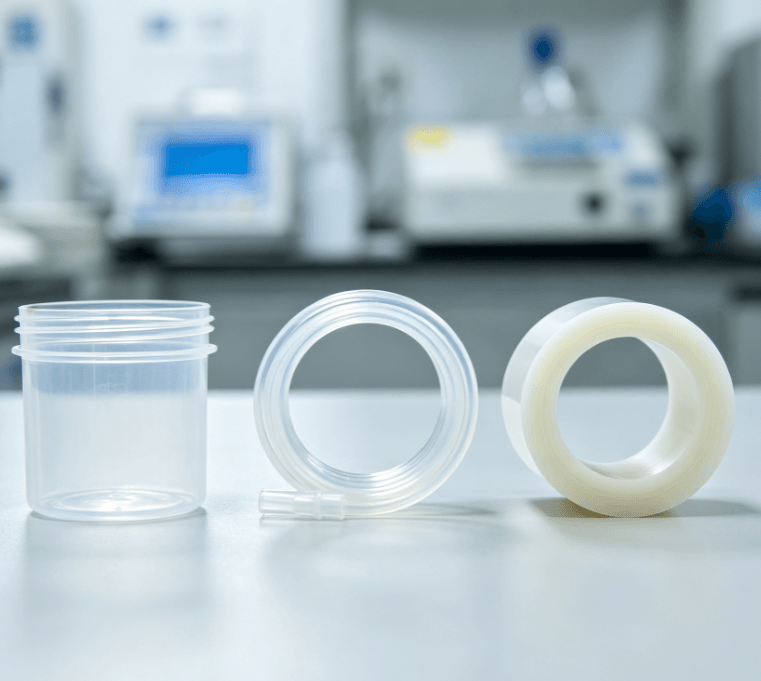
Diagnostic components like syringe barrels, specimen containers, and labware rely exclusively on PP. High clarity PP grades allow clear fluid visibility while resisting stress cracking during centrifuge operation. Selecting the optimal polymer balances clinical safety, mechanical durability, and total manufacturing costs.
Regional Supply Considerations and Material Sourcing Standards
Medical supply chains must account for ambient storage temperatures and humidity in tropical climates. Sourcing medical consumables in regions like Ghana requires materials that resist heat aging and shelf degradation. Hospital procurement teams evaluate polymer stability to ensure product integrity in variable storage environments.
Understanding PP vs PVC vs EVA unimed medical supplies ghana sourcing logistics helps healthcare facilities maintain inventory reliability. Standardizing on compliant, international-grade polymers reduces supply chain disruptions across regional medical centers. Verified manufacturers provide full batch traceability and compliance documentation for imported medical consumables.
Navigating Polymer Selection for Certified Medical Consumables
Medical device manufacturers must balance polymer processing costs with stringent international regulatory approvals. Working with experienced OEM suppliers streamlines material selection, tooling design, and quality assurance workflows. Standardized quality control protocols ensure consistent mechanical performance across high-volume production lots.
Sourcing certified patient monitoring accessories and medical consumables requires rigorous supplier evaluation. Evaluating biocompatible materials ensures long-term safety for critical clinical monitoring applications. Exploring options on Unimed Medical’s Products Catalog provides access to multi-compatible patient cables and diagnostic accessories.
FAQ
Why is EVA preferred over PVC for IV bags?
EVA is phthalate-free and DEHP-free, preventing harmful chemical leaching into liquid medications. It also offers high low-temperature flexibility and prevents drug absorption during total parenteral nutrition.
Which polymer handles steam autoclaving best?
Polypropylene is the only polymer among the three that withstands steam autoclaving temperatures up to 121°C. Flexible PVC and EVA melt or deform when exposed to high-temperature steam sterilization.
Are all PVC medical supplies harmful due to phthalates?
No, modern medical PVC can be formulated with non-phthalate plasticizers such as TOTM or DINCH. These alternative plasticizers satisfy international safety standards while maintaining the flexibility of traditional PVC.
How does PP compare to EVA in cable overmolding?
PP provides rigid structural support for connector housings, whereas EVA offers flexible, elastomeric strain relief. Engineers frequently combine both polymers in multi-material medical cable assemblies for optimal performance.
Reference Sources
- ISO 10993-1:2018 – Biological evaluation of medical devices – Part 1: Evaluation and testing within a risk management process
- U.S. Pharmacopeia (USP) – USP Class VI Plastic Material Biocompatibility Standards
- U.S. Food and Drug Administration (FDA) – Safety Assessment of Di(2-ethylhexyl)phthalate (DEHP) Released from PVC Medical Devices