
Plastic injection molding is a vital part of modern manufacturing. For instance, it is used to make everything from small medical sensors to tough car parts. Basically, the process works by melting plastic resins and injecting them into a metal mold under high pressure.
Because of this, engineers and managers need to understand how the process works. This knowledge helps them make stronger products and follow safety standards. It also makes it easier to move from a first design to mass production. However, even though “melting and shaping” sounds simple, the heat and pressure inside the mold are what truly decide the final quality.
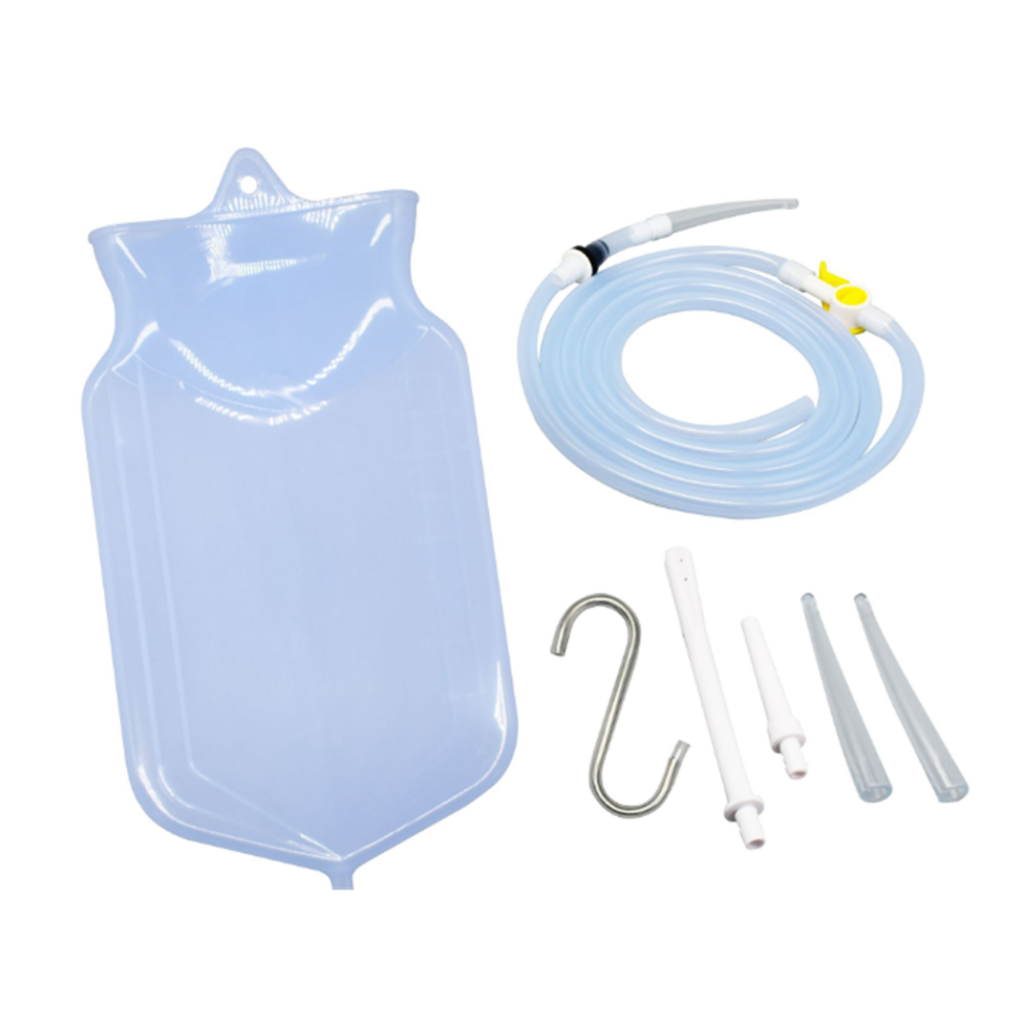
The Mechanical Lifecycle: How Plastic Parts Are Formed
The injection molding cycle is a repeatable, high-speed sequence that typically lasts from a few seconds to several minutes, depending on the part’s wall thickness and complexity.
- Clamping: The two halves of the mold are pressed together by a hydraulic or electric clamping unit. This unit must exert enough force—measured in tons—to keep the mold sealed against the high pressure of the incoming plastic.
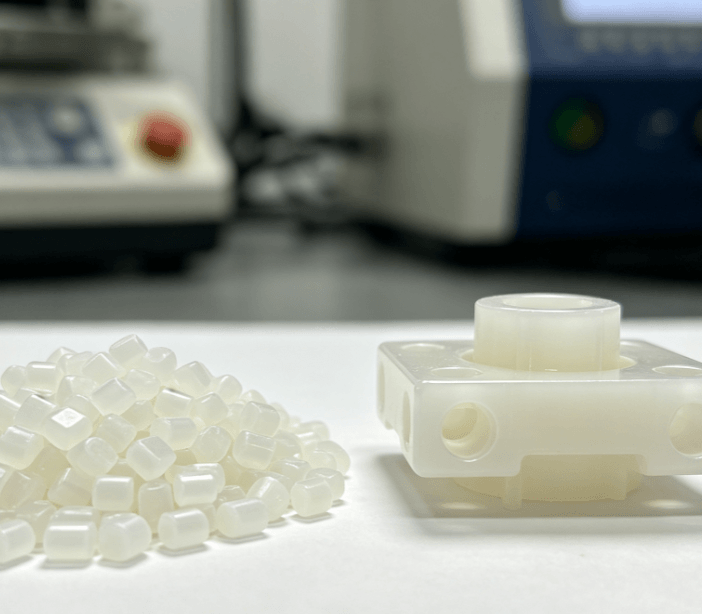
- Injection: Raw plastic granules are fed from a hopper into a heated barrel. A reciprocating screw rotates, melting the plastic through a combination of external heat and shear friction. Once enough material (the “shot”) is ready, the screw moves forward, forcing the molten plastic through a nozzle into the mold cavity.
- Dwelling (Packing): After the cavity is filled, pressure is maintained. This ensures that the plastic occupies every microscopic detail of the mold and compensates for the natural shrinkage that occurs as the material begins to cool.
- Cooling: This is often the longest part of the cycle. Water or oil circulates through internal cooling channels within the mold to solidify the plastic. Proper cooling prevents warping and structural weaknesses.
- Ejection: The mold opens, and an ejector system—usually pins or plates—pushes the finished part out of the cavity. The mold then closes, and the cycle repeats.
Material Science: Choosing the Right Polymer
The success of a molded part depends heavily on the resin selected. In high-stakes industries like medical device manufacturing, the material must not only be moldable but also biocompatible and resistant to sterilization.
Common materials used in the process include:
- Polypropylene (PP): Known for its fatigue resistance and chemical stability. It is often used for living hinges and laboratory equipment.
- Acrylonitrile Butadiene Styrene (ABS): A robust thermoplastic that offers high impact resistance and a superior surface finish, common in electronic housings.
- Thermoplastic Elastomers (TPE/TPU): These materials offer “soft-touch” characteristics. In the production of medical patient monitoring accessories, TPU is frequently used for overmolding connectors and cable strain reliefs to provide flexibility and durability during clinical use.
- Polycarbonate (PC): Used when transparency and high impact strength are required, such as in surgical tool handles or protective casings.
Why Injection Molding Dominates High-Volume Production
When a product enters the scale-up phase, injection molding is usually the preferred method over 3D printing or CNC machining. The primary reason is scalability. While the initial cost of the metal mold (tooling) is high, the “price per part” drops significantly as volume increases.
| Feature | Injection Molding | 3D Printing (Prototyping) |
| Production Speed | Very High (seconds per part) | Low (hours per part) |
| Material Choice | Thousands of resin grades | Limited to specific filaments/resins |
| Surface Finish | High (Glossy, Matte, or Textured) | Visible layer lines |
| Structural Integrity | Isotropic (consistent strength) | Anisotropic (weaker between layers) |
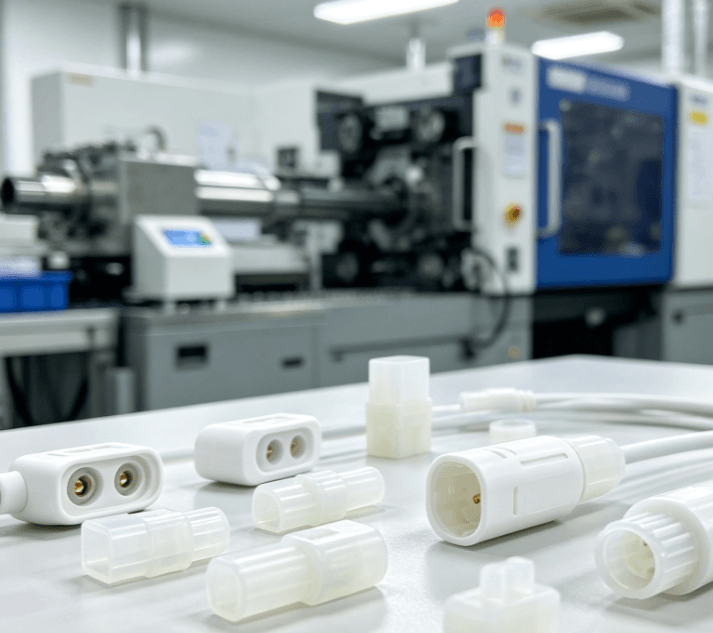
Furthermore, the process allows for insert molding and overmolding. This is particularly critical in the manufacturing of medical cables and sensors. For instance, a metal electrical contact can be placed inside the mold before the plastic is injected, resulting in a single, seamless component that protects the internal wiring from moisture and mechanical stress.
Critical Engineering Constraints: Design for Manufacturing (DfM)
A part that looks perfect in a CAD model may fail during the injection molding process if DfM principles are ignored. Engineers must account for several physical limitations:
- Wall Thickness: Inconsistent wall thickness leads to “sink marks” (depressions) or internal voids. Uniform walls ensure even cooling.
- Draft Angles: To ensure the part can be ejected from the mold without scratching or sticking, the vertical walls must be tapered slightly. A typical draft angle is 1 to 2 degrees.
- Gate Location: The “gate” is the point where the plastic enters the mold. Its placement affects how the material flows and where “knit lines” (the point where two flow fronts meet) occur, which can be a point of mechanical weakness.
Precision in Regulated Industries
In medical manufacturing, companies follow strict quality rules. Doctors and nurses use these components in life-saving tools, such as SpO2 sensor housings and NIBP (Non-Invasive Blood Pressure) connectors. Because of this, manufacturers often use controlled environments to keep the molding process clean and safe. This ensures every part meets high medical standards.
Summary: The Strategic Value of the Process
Injection molding is still the most efficient way to make complex plastic parts. By combining smart chemistry with precise engineering, this method produces lightweight, strong, and affordable products in large numbers. Whether you need a simple bottle cap or a complex medical assembly, this process delivers a level of quality and consistency that other methods simply cannot match.
FAQ
1. How long does a typical injection mold last?
High-quality steel molds (Class 101) can last for over one million cycles. Aluminum molds are more affordable but are generally limited to 1,000 to 10,000 cycles, making them better for low-volume bridge production.
2. What causes “flash” in injection molding?
Flash occurs when molten plastic escapes between the two halves of the mold. This is usually caused by insufficient clamping force, worn-out mold plates, or excessively high injection pressure.
3. Can injection molding produce parts with different colors?
Yes. Colorants or “masterbatches” are mixed with the raw resin before it enters the heating barrel. The process allows for precise color matching, which is vital for branding or color-coding medical equipment.
4. What is the difference between injection molding and blow molding?
Injection molding is used for solid parts (like a phone case), while blow molding is used to create hollow parts (like a water bottle).
5. How does cleanroom molding differ from standard molding?
Cleanroom molding takes place in a HEPA-filtered environment to prevent airborne particles from contaminating the plastic. This is a mandatory requirement for many medical-grade components to ensure they are free from bioburden and particulates.
Reference Sources
- ISO 13485: Medical devices — Quality management systems — Requirements for regulatory purposes. iso.org
- ASTM D638: Standard Test Method for Tensile Properties of Plastics. astm.org
- British Plastics Federation (BPF): Comprehensive Guide to the Injection Moulding Process. bpf.co.uk
- The Society of Plastics Engineers (SPE): Technical resources on polymer processing and thermal dynamics. 4spe.org