
Introduction 🔬
Single-use products dominate industries where hygiene, consistency, and cost-efficiency are critical. From sterile clinical environments to daily laboratory testing, the safety of these items depends entirely on polymer science.
Engineers must select the exact polymer grade to ensure a product survives manufacturing, sterilization, and its final application. A slight mistake in material selection can lead to cracked containers or chemical contamination. This guide explains the core technical properties of common disposable plastic materials and how they function in high-demand environments.
What Defines Disposable Plastic Materials in Modern Manufacturing? ⚙️
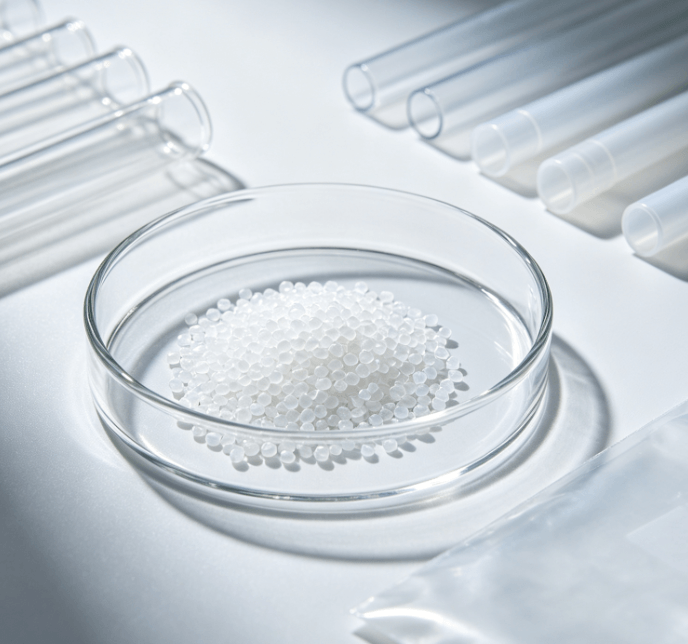
To be suitable for single-use applications, a polymer must meet strict engineering criteria. Disposable plastic materials are thermoplastic polymers designed for high-volume injection molding, rapid cooling, and safe usage.
Engineers evaluate these plastics based on three key properties:
- 🧪 Melt Flow Index (MFI): This determines how easily the melted plastic flows into complex molds during production.
- 🌡️ Sterilization Compatibility: The plastic must survive Gamma irradiation, Ethylene Oxide (EtO) gas, or steam autoclaving without melting or losing strength.
- 🛡️ Chemical Inertness: The material cannot react with bodily fluids, laboratory reagents, or stored pharmaceutical liquids.
Core Polymer Classifications for Single-Use Products 💎
Different disposable applications require vastly different mechanical properties. Here is a technical breakdown of the primary polymers used in single-use manufacturing.
1. Polypropylene (PP) 🔥
PP is a rigid, semi-crystalline polymer. It has a high melting point, usually between 130°C and 171°C. This makes it one of the few common plastics that can survive high-temperature steam sterilization (autoclaving). PP also offers excellent fatigue resistance. Engineers frequently specify it for items that bend repeatedly, like flip-top caps, or for heat-resistant containers.
2. Polyethylene (PE – HDPE & LDPE) 📦
PE comes in high-density and low-density variations. Low-Density Polyethylene (LDPE) provides extreme flexibility and a high moisture barrier. It is the standard choice for soft squeeze bottles and flexible films. High-Density Polyethylene (HDPE) offers higher tensile strength and is used for rigid, impact-resistant containers.
3. Polyvinyl Chloride (PVC) 💧
Medical and industrial-grade PVC is highly versatile. By adding chemical plasticizers, manufacturers transform rigid PVC into a soft, flexible material. It offers excellent optical clarity and resists kinking. This makes PVC the global standard for fluid management systems.
4. Polystyrene (PS) 🔍
PS is naturally brittle but provides glass-like optical clarity. It is primarily used when technicians need to visually inspect a liquid or a bacterial culture. It is not suitable for high heat but works perfectly for room-temperature diagnostic equipment.
📊 Material Property Comparison
| Polymer Type | Clarity Level | Flexibility | Sterilization Method | Common Application |
| PP 🔥 | Translucent | Rigid | Autoclave, EtO | High-speed centrifuge tubes |
| LDPE 📦 | Opaque | Very High | EtO, Gamma | Flexible moisture packaging |
| PVC 💧 | Transparent | High | EtO, Gamma | Oxygen therapy tubing |
| PS 🔍 | Transparent | Very Low | Gamma, E-beam | Optical diagnostic dishes |
Application Scenarios: Plastics in Medical and Laboratory Disposables 🏥
Nowhere is material selection more critical than in the healthcare and life sciences sectors. These environments require strict infection control, driving the massive demand for precision single-use items.
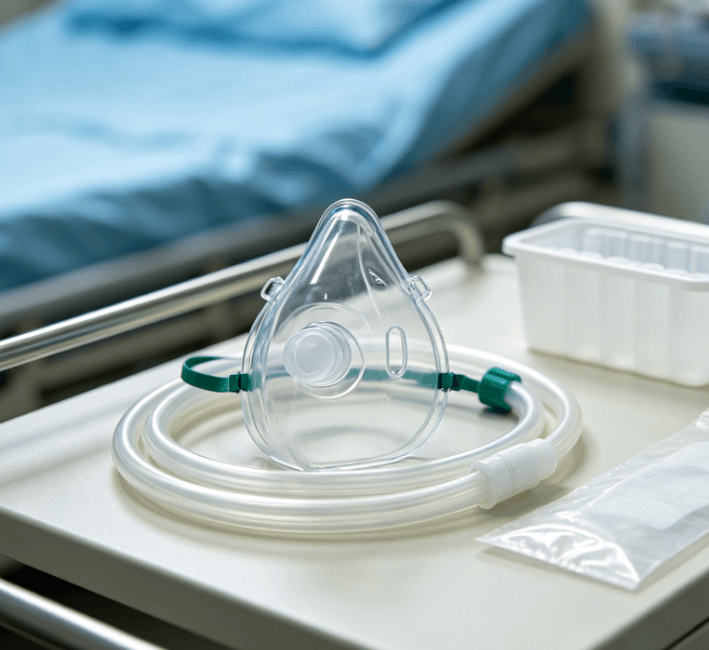
When reviewing comprehensive medical consumable and laboratory products, you will see these polymers matched exactly to their clinical functions. For example, oxygen therapy masks and fluid drainage bags rely heavily on flexible PVC. The soft PVC conforms to a patient’s face comfortably, while its transparency allows nurses to visually monitor breathing or fluid levels.
Conversely, laboratory test tubes and specimen containers are typically molded from Polypropylene (PP). The PP walls prevent chemical reactions with blood samples. More importantly, PP has the tensile strength to survive the extreme physical force generated by high-speed laboratory centrifuges. Soft, wearable items, such as medical ostomy bags, utilize the moisture-barrier properties of LDPE to prevent leaks and block odors entirely.

How Environmental Stress Influences Polymer Selection ⚠️
Beyond basic shape and cost, product designers must calculate environmental stress factors. Plastics behave very differently when exposed to cold storage, UV light, or sudden physical impact.
- ❄️ Cold Storage: Polypropylene becomes highly brittle at sub-zero temperatures. If a container must store samples in a deep freezer (-80°C), engineers will switch to a specialized grade of HDPE.
- ☀️ UV Degradation: If a product sits on a warehouse shelf for two years, the polymer must resist UV light. Manufacturers blend specific UV stabilizers into the resin to ensure the item does not crack or turn yellow.
FAQ 🙋
Q: What makes a plastic material “medical-grade”?
A: Medical-grade plastics are manufactured under strict cleanroom conditions. They must pass specific biocompatibility testing (such as ISO 10993) to prove they do not release harmful chemicals when in contact with human tissue.
Q: Why is PVC commonly used in flexible disposable tubing?
A: Standard PVC is naturally rigid, but adding safe plasticizers makes it highly flexible. It strongly resists kinking, meaning fluid or oxygen flow will not be blocked if the tube bends.
Q: Can all disposable plastic materials be sterilized with steam?
A: No. Most plastics, including PVC, PE, and PS, will melt or warp at high temperatures. Polypropylene (PP) is the primary disposable plastic capable of surviving repeated steam sterilization (autoclaves).
Reference Sources 📚
- ISO 10993-1: Biological evaluation of medical devices — Part 1.
- U.S. FDA: CFR Title 21, Subchapter H – Medical Device Regulations.
- ASTM D4000: Standard Classification System for Specifying Plastic Materials.
- British Plastics Federation (BPF): Technical data sheets on Polymer Properties.