Disposable medical supplies for clinics are easiest to buy when the list reflects the clinic’s actual service scope, not a generic hospital catalogue. For an outpatient or primary-care setting, start with five purchasing zones: examination, minor procedures, diagnostics and sample handling, housekeeping, and receiving documentation. Then select only the approved line items each zone genuinely needs.
That approach keeps small stores more manageable and makes an RFQ easier to compare. It also keeps the procurement role separate from clinical decisions: the facility’s own policies, destination-market rules, laboratory requirements, and product instructions determine the final configuration. CDC describes Standard Precautions as risk-assessment based and points facilities to PPE and environmental-cleaning guidance; WHO likewise frames laboratory safeguards around risk assessment. [2][3]
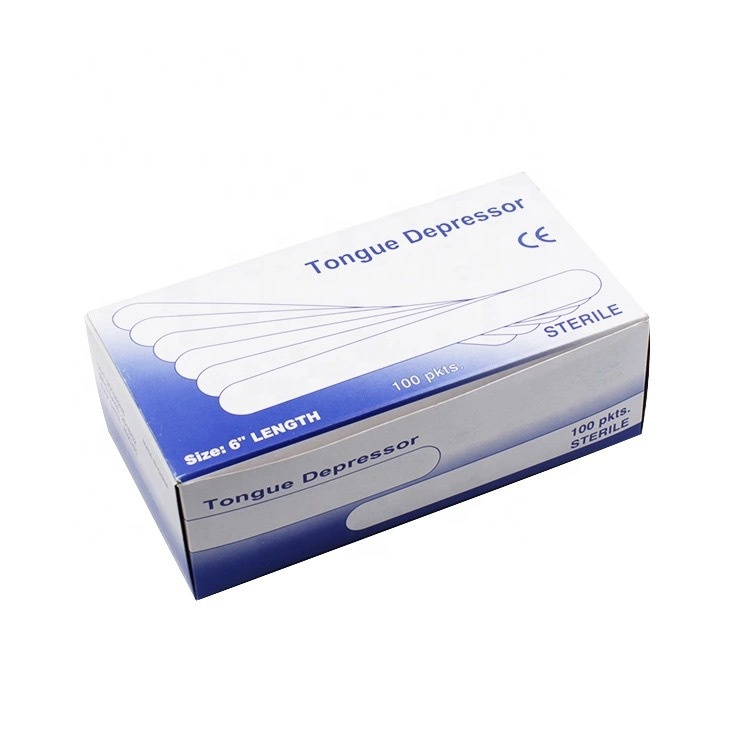
Tongue depressors — view product page.
Build the order list around clinic work zones
A useful list separates what the clinic orders by where the item is managed. This prevents a single “consumables” line from hiding different documentation, packaging, and replenishment needs. The examples below are prompts for a buyer’s review, not a required kit or patient-care protocol.
| Clinic work zone | Examples to review with the local team | Buyer’s specification prompt |
|---|---|---|
| Examination | Examination gloves, tongue depressors, table-cover items, examination gowns | Which approved items are consumed in a routine room turnover, and what unit of issue fits the cupboard? |
| Minor procedures | Procedure packs, gauze, dressings, syringes and needles, sterile-field items | Which items are authorised for the clinic’s procedure scope, and which must be individually packed? |
| Diagnostics and sample handling | Specimen containers, swabs, labels, transport bags, test consumables | What does the receiving laboratory or local process require for identity, packaging, and documentation? |
| Housekeeping and waste | Facility-approved cleaning items, wipes, waste liners, sharps containers where required | Which product format, storage condition, and waste-stream rule does the facility specify? |
| Receiving and records | Labels, lot/expiry capture tools, shelf labels, quarantine tags | What must be checked and recorded before stock is released to a clinic area? |
Medical gloves deserve their own product line rather than a vague “PPE” entry. FDA describes medical gloves as disposable and distinguishes examination, surgical, and chemotherapy gloves; its U.S. page also notes that package labelling identifies the material used. [1] For buyers, that supports a clear request for the approved product type, material disclosure, package configuration, and destination-market documentation—without assuming that one glove is suitable for every clinic activity.
Convert the list into a small-space stock map
Limited storage changes the buying decision. Instead of placing all disposables in one bulk area, map each approved line to a home: a room cupboard, a locked procedure store, a sample-handling point, a housekeeping store, or a central reserve. Put the item description, unit of issue, and reorder owner on the shelf label.
This map gives the team a way to spot duplications, slow movers, and items that need a different storage condition. Keep the reserve quantity modest enough that staff can see it, rotate it, and reconcile it. Storage conditions on the manufacturer’s label, facility rules, expiry controls, and local waste requirements always take priority over a generic layout. WHO’s procurement guide emphasizes clear, accountable procurement processes, a useful principle for making each location and owner explicit. [5]
Forecast in review cycles, not fixed quantities
There is no credible universal monthly quantity for disposable clinic supplies. Consumption changes with appointment mix, procedure scope, testing arrangements, room count, and the clinic’s approved policies. A practical forecast starts with recent issue history by work zone, then records the review period, planned service changes, and a locally approved contingency allowance.
For each line, use a simple question: Will stock cover expected demand until the next review and replenishment opportunity? If the answer depends on an assumption, document the assumption in the order file rather than presenting a guessed quantity as a fact. This cadence-based method is more transparent for distributors and clinics than copying a hospital list into a small facility. It also gives purchasers a traceable reason for any increase or decrease in the next RFQ. [5]
Make sample-handling lines configuration-specific
Sample containers, swabs, labels, bags, and test consumables can appear straightforward but often have the tightest local dependencies. The clinic should convert requirements from its receiving laboratory, authorized testing scope, and local transport rules into a written specification before requesting quotes. Do not treat “sample supplies” as interchangeable across sites.
WHO’s Laboratory Biosafety Manual says risk assessment should inform risk-control measures. [3] In purchasing terms, that means the procurement file should state the destination process and ask the responsible local team to validate compatibility. This article does not set collection, packaging, or transport practice; it simply recommends that a buyer avoid ordering these lines without the applicable local requirements.
Ask for documentation that matches the destination market
A good supplier conversation is documented line by line. Begin with the product identity, intended market, unit of issue, pack format, and the evidence your organisation needs to assess the item. Depending on the product and destination, that review may include material disclosure, storage information, relevant lot/batch and expiry details, labelling, instructions, and market-specific regulatory documentation.
For products subject to the U.S. device-identification framework, FDA says its UDI system is intended to identify medical devices from manufacture through distribution to patient use; when fully implemented, the labels of most devices include a UDI in human- and machine-readable form. [4] That is a U.S.-specific reference, not a promise that every disposable product or every market uses UDI. Elsewhere, ask the local regulatory or quality function which identifiers and documents apply.
Requesting documents is not the same as proving conformity or supplier capability. Review the response against the destination market and the clinic’s acceptance process. Do not infer certifications, stock, lead time, product performance, or shipping coverage from a catalogue listing alone.
Use the catalogue as a starting point, then issue a precise RFQ
Browse the Unimed product catalogue to identify relevant product families, and use the linked tongue-depressor page above as a product-page example. Treat the website as a discovery tool, then confirm every commercial and technical point in writing.
RFQ next step: Send the supplier a destination market, item list, unit of issue, expected review-cycle volume band, required documents, and delivery point. Ask for a written, line-by-line response so the clinic or distributor can compare offers without relying on general assurances.
FAQ
What disposable medical supplies should a primary-care clinic keep?
Start with the approved items needed for the clinic’s examination, minor-procedure, diagnostics/sample-handling, housekeeping, and receiving workflows. The exact list should follow the facility’s scope, local rules, and documented policies rather than a universal template.
How do clinics forecast disposable supply demand?
Review recent issues or consumption by work zone, then adjust for planned changes in service scope and the next replenishment opportunity. Record assumptions and use a locally approved contingency rather than claiming a fixed quantity suits every clinic.
What should a clinic ask for in a disposable-supplies RFQ?
Specify the destination market, product identity, unit of issue, pack format, required documentation, volume band, and delivery point. Request a written response against each line item so differences in offers are visible.
How can a small clinic store disposable supplies efficiently?
Assign each approved item to a labelled home close to its managed work zone, with a named reorder owner. Keep reserve stock visible and follow manufacturer-labelled storage conditions, facility policy, and expiry controls.
Are all disposable medical supplies regulated in the same way?
No. Regulatory status, labelling, documentation, and identifiers vary by product and destination market. Confirm applicable requirements with the responsible local regulatory or quality function before purchase.
References
[1] U.S. Food and Drug Administration, Medical Gloves.
[2] U.S. Centers for Disease Control and Prevention, Standard Precautions for All Patient Care.
[3] World Health Organization, Laboratory biosafety manual, 4th edition.
[4] U.S. Food and Drug Administration, Unique Device Identification System (UDI System).
[5] World Health Organization, Procurement process resource guide.