When launching a new hardware product, scaling a medical device portfolio, or sourcing industrial equipment, your supply chain strategy dictates your time-to-market. The foundational decision usually comes down to one question: should you use an OEM or an ODM model?
Understanding the distinction between OEM vs ODM manufacturing is critical. It impacts everything from Intellectual Property (IP) ownership and Non-Recurring Engineering (NRE) costs to regulatory compliance and tooling limitations.
Here is the direct difference:
OEM (Original Equipment Manufacturer) involves a factory producing goods based entirely on your custom specifications, CAD designs, and Bill of Materials (BOM).
ODM (Original Design Manufacturer) involves a factory providing pre-engineered, fully developed products that you can rebrand, slightly modify, and sell as your own.
To determine which framework fits your production lifecycle, we need to examine the mechanical, financial, and regulatory realities of both.
What is OEM Manufacturing? (The “Build-to-Print” Framework)
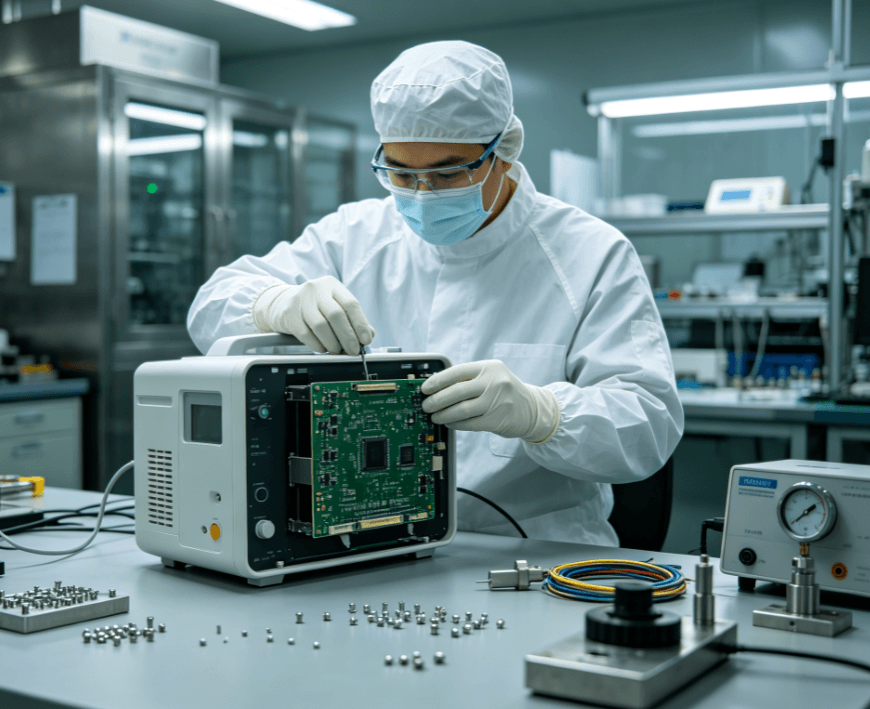
In an OEM relationship, the buying company is the inventor. You handle the entire Research and Development (R&D) phase. The manufacturer acts strictly as the executor of your blueprints.
If you design a proprietary patient monitor enclosure with custom injection-molded plastics and a unique PCB architecture, the OEM factory simply builds it to your exact tolerances.
Key Characteristics of OEM:
- Total IP Control: You retain full ownership of the design, source code, and tooling.
- Custom Tooling Required: Production cannot begin until custom molds, dies, or fixtures are machined and validated.
- High Development Costs: You bear the financial burden of prototyping, testing, and engineering.
- Longer Lead Times: Transferring designs to manufacturing (DFM), validating tooling, and conducting pilot runs often takes months.
In large-volume production, the OEM model is preferred for highly specialized applications where unique functionality or stringent regulatory adherence—such as FDA 510(k) clearance for medical devices—is required.
What is ODM Manufacturing? (Private Labeling & Co-Design)
ODM manufacturing flips the R&D burden. The manufacturer invests its own capital to design, test, and tool a product. Buyers then purchase these pre-developed items, apply their brand identity, and bring them to market immediately. This is frequently referred to as “white-labeling” or “private labeling.”
For example, instead of spending $100,000 engineering a standard infrared thermometer, a medical supply brand can partner with an ODM. The factory already has the molds, the calibrated sensors, and the assembly line ready. The buyer simply requests custom packaging and localized firmware.
Key Characteristics of ODM:
- Shared or Factory-Owned IP: The manufacturer owns the core design. You only own your brand assets.
- Zero Tooling Costs: Since the factory uses existing molds, your upfront capital expenditure drops drastically.
- Rapid Time-to-Market: You bypass the R&D and prototyping phases, allowing for product launches in weeks rather than months.
- Limited Customization: Modifications are usually restricted to cosmetics, colors, packaging, or minor software tweaks.
OEM vs ODM Manufacturing: Technical & Commercial Comparison
To streamline supplier evaluation, compare the fundamental trade-offs between the two models.
| Feature/Metric | OEM (Original Equipment) | ODM (Original Design) |
| Product Design | Created by the Buyer | Created by the Factory |
| Intellectual Property | 100% Buyer Owned | Factory Owned (Usually) |
| Upfront NRE Costs | High (Tooling, DFM, Prototyping) | Low to Zero |
| Time to Market | 6 to 18 Months | 1 to 3 Months |
| Profit Margins | Higher at scale (no middleman IP) | Lower (commoditized product) |
| Minimum Order Quantity | Usually High (to amortize tooling) | Flexible / Lower |
Critical Factors When Selecting a Manufacturing Strategy
Choosing between OEM and ODM is rarely just a pricing decision. Procurement teams must evaluate the project against four strict criteria.
R&D Budget and Engineering Capacity
If your company lacks in-house mechanical engineers, PCB designers, or industrial designers, OEM is not viable. You cannot send a factory a rough sketch and expect OEM execution. Factory engineers require complete STEP files, Gerber files, and detailed tolerance callouts. If you lack these, an ODM strategy mitigates your engineering deficit.
Regulatory and Compliance Burdens
In heavily regulated sectors, such as healthcare or automotive, compliance dictates the manufacturing model. For Class II medical devices, the legal manufacturer must hold specific ISO certifications (like ISO 13485) and maintain meticulous Device History Records (DHR).
If you use an ODM, the factory often holds the CE mark or FDA registration for that specific device, significantly reducing your compliance workload. If you go OEM, your company must navigate the entire certification process from scratch.
Competitive Moats and Differentiation
ODM products are accessible to your competitors. If you source an off-the-shelf ambulance stretcher from an ODM catalog, another distributor can source the exact same stretcher. If market dominance relies on proprietary features, custom form factors, or disruptive technology, OEM is the only path that protects your competitive advantage.
Supply Chain Scalability
Sampling delays may occur when transitioning a product from prototyping to mass production in an OEM setup. Tooling wears out, and supply chain bottlenecks for custom components are common. ODMs often have established, highly optimized supply chains for their specific catalog items, ensuring more stable lead times during global component shortages.
Evaluating Partner Capabilities: Real-World Implementation
When auditing potential manufacturing partners, the best suppliers often operate hybrid models—offering extensive ODM catalogs while maintaining the machining and assembly capabilities required for pure OEM projects.
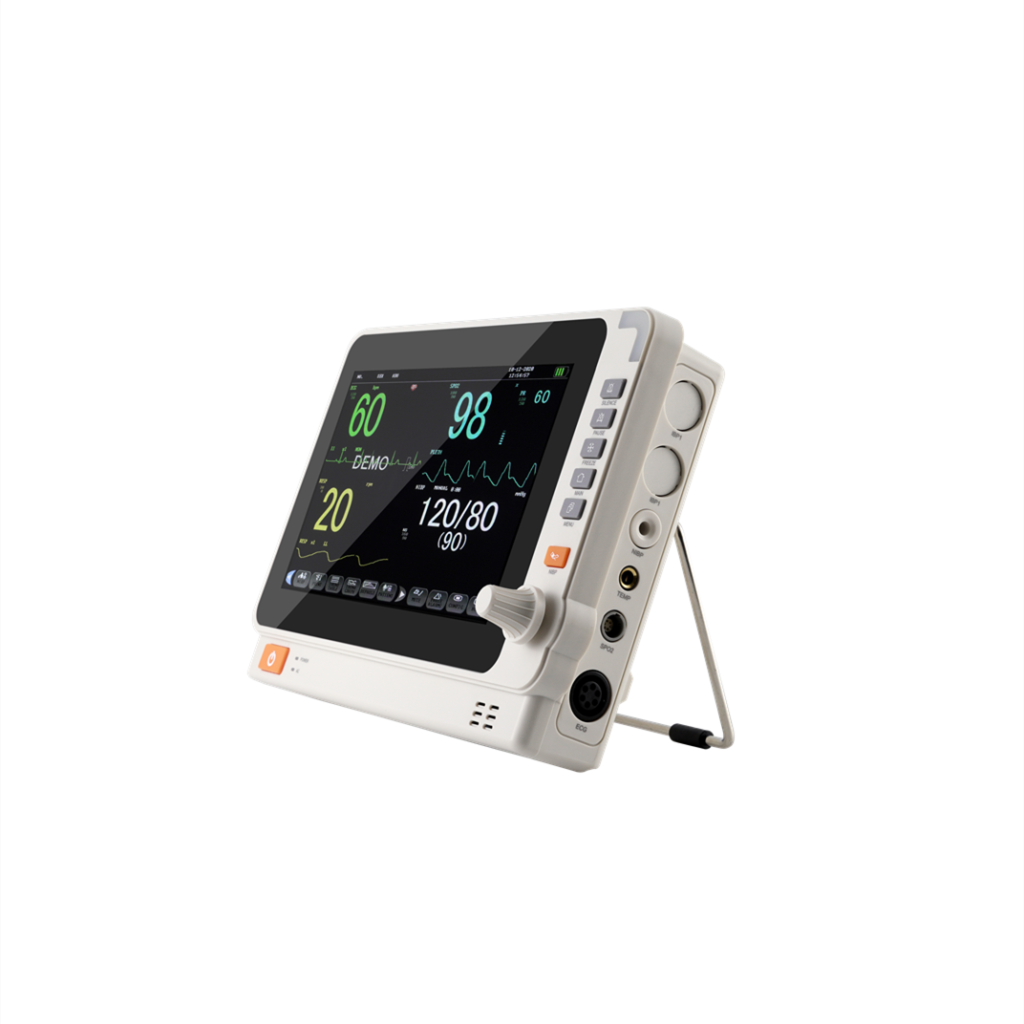
This is particularly evident in specialized sectors like medical instrumentation and hospital equipment. For instance, a procurement manager browsing Unimed Medical’s product portfolio will find a massive infrastructure supporting hundreds of medical devices, ranging from patient monitors and ECG machines to standard medical consumables.
A strategic buyer can leverage a partner with this level of depth in two ways:
- The ODM Approach: A regional distributor needing to quickly expand its catalog might select existing, proven Unimed hospital beds or oxygen concentrators, applying their own branding to fulfill immediate hospital procurement contracts.
- The OEM Approach: A health-tech startup developing a proprietary non-invasive diagnostic tool can utilize the same factory’s established ISO 13485-certified assembly lines, cleanrooms, and engineering expertise to manufacture their custom-designed hardware safely and at scale.
Partnering with a supplier capable of both allows brands to launch low-risk ODM products to generate initial cash flow, while simultaneously developing high-margin OEM products in the background.
Next Steps for Procurement and Engineering Teams
Transitioning from product concept to mass production requires rigorous supplier validation. Before issuing a Request for Quotation (RFQ):
- Finalize your exact Bill of Materials (BOM) if pursuing OEM.
- Define your absolute Minimum Order Quantity (MOQ) limits.
- Audit the factory’s Quality Management System (QMS) to ensure they meet your target market’s regulatory standards.
- Draft a strict Non-Disclosure Agreement (NDA) and NNN (Non-Disclosure, Non-Use, Non-Circumvention) agreement before sharing proprietary CAD files.
By aligning your internal engineering capabilities with the correct manufacturing model, you minimize production delays and protect your commercial margins.
Frequently Asked Questions (FAQ)
Can an ODM factory steal my product idea?
If you are purchasing a purely ODM product, the factory already owns the idea and the design. However, if you request custom modifications to an ODM product, you should establish a clear NNN (Non-Disclosure, Non-Use, Non-Circumvention) agreement to prevent the factory from selling your specific localized modifications to competitors.
Is tooling ownership standard in OEM contracts?
Yes, in a standard OEM agreement, you pay for the creation of injection molds, stamping dies, and testing fixtures (NRE costs). The contract must explicitly state that you retain sole ownership of this tooling, giving you the right to move the molds to a different facility if the supplier relationship degrades.
How do lead times differ between the two models?
ODM lead times typically range from 30 to 60 days, as the factory only needs to handle localized branding, packaging, and standard assembly. OEM lead times frequently exceed 6 months due to the required phases of Design for Manufacturability (DFM), tooling creation, T1/T2 sample validation, and pilot production runs.
Can a manufacturer act as both an OEM and an ODM?
Absolutely. Many tier-1 and tier-2 manufacturers operate hybrid business models. They maintain their own catalog of white-label products (ODM) to ensure baseline factory utilization while reserving dedicated assembly lines and engineering teams for custom client projects (OEM).
Reference Sources
- ISO 13485:2016 – Medical devices — Quality management systems — Requirements for regulatory purposes. International Organization for Standardization.
- FDA Center for Devices and Radiological Health (CDRH) – Quality System (QS) Regulation/Medical Device Good Manufacturing Practices.
- ASTM International – Standard Guide for Manufacturing, Quality, and Regulatory Compliance.